Readiness Guide
Enterprise AI Voice readiness: what must be true before production
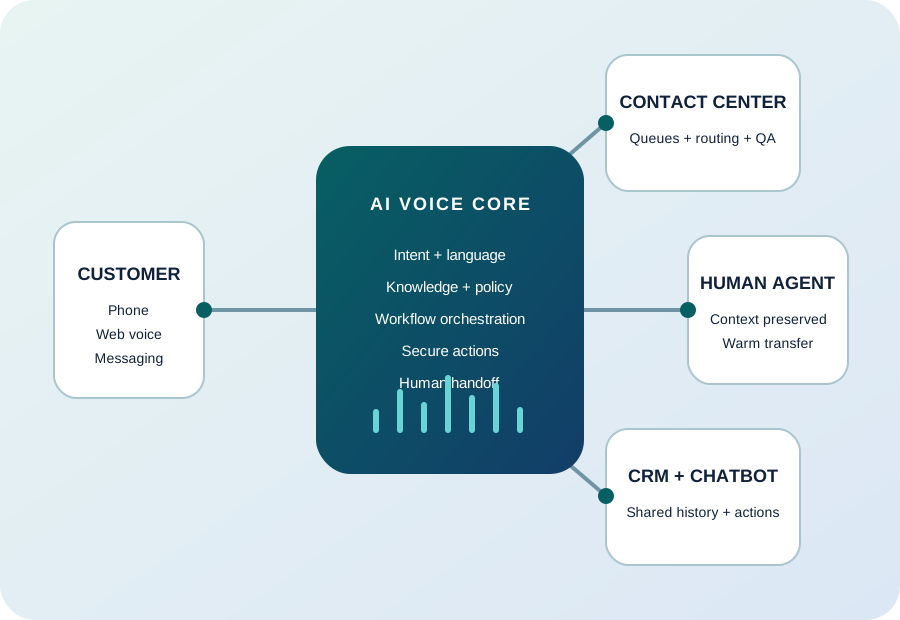
A convincing demo proves that a model can speak. A production service must also understand the journey, access the right systems, act safely, recover from failure, and transfer to a prepared human.
1. Choose a journey with a measurable outcome
Define the customer intent, current friction, expected volume, permitted actions, completion criteria, and reasons the AI should escalate.
2. Map data and integration dependencies
Identify CRM, ticketing, scheduling, order, identity, payment, knowledge, and contact-center systems required to answer or complete the request.
3. Design conversation behavior
Plan interruption, ambiguity, confirmation, silence, emotion, accessibility, multilingual needs, error recovery, and an explicit path to human assistance.
4. Establish trust and governance controls
Define disclosure, consent, recording, retention, authentication, authorization, sensitive-data handling, audit, ownership, and model-change approval.
5. Test outcomes and failure modes
Evaluate task completion, answer quality, latency, tool failures, prompt injection, unsafe requests, transfer context, and behavior outside expected journeys.
6. Prepare production operations
Assign monitoring, incident response, conversation review, prompt and knowledge updates, release gates, cost controls, and recurring outcome governance.
Do not treat human handoff as failure
A strong AI voice experience recognizes uncertainty and risk early, routes to the correct team, and gives the agent useful context. The objective is successful resolution, not automation at any cost.